The Don Shalvey Story
Chapter 2: San Carlos and the Birth of a Movement
A School Built Around Its Community
California had given San Carlos Charter No. 1. With that distinction came a responsibility extending beyond the school’s own students. The press was already watching. What happened at San Carlos would help show what California’s new charter law could make possible – and what chartering might come to mean for public education across the country.
Don embraced that responsibility and brought to the effort a lifetime of lessons about schools. His ideas carried echoes of every place that had shaped him: the high expectations and personal care of his Catholic schools, the conviction at Gonzaga that relationships were central to learning, and the years in Merced when parents and educators had shown him how much a community could accomplish together. Now he had an opportunity to give those ideas fuller expression than the conventional school system had allowed.
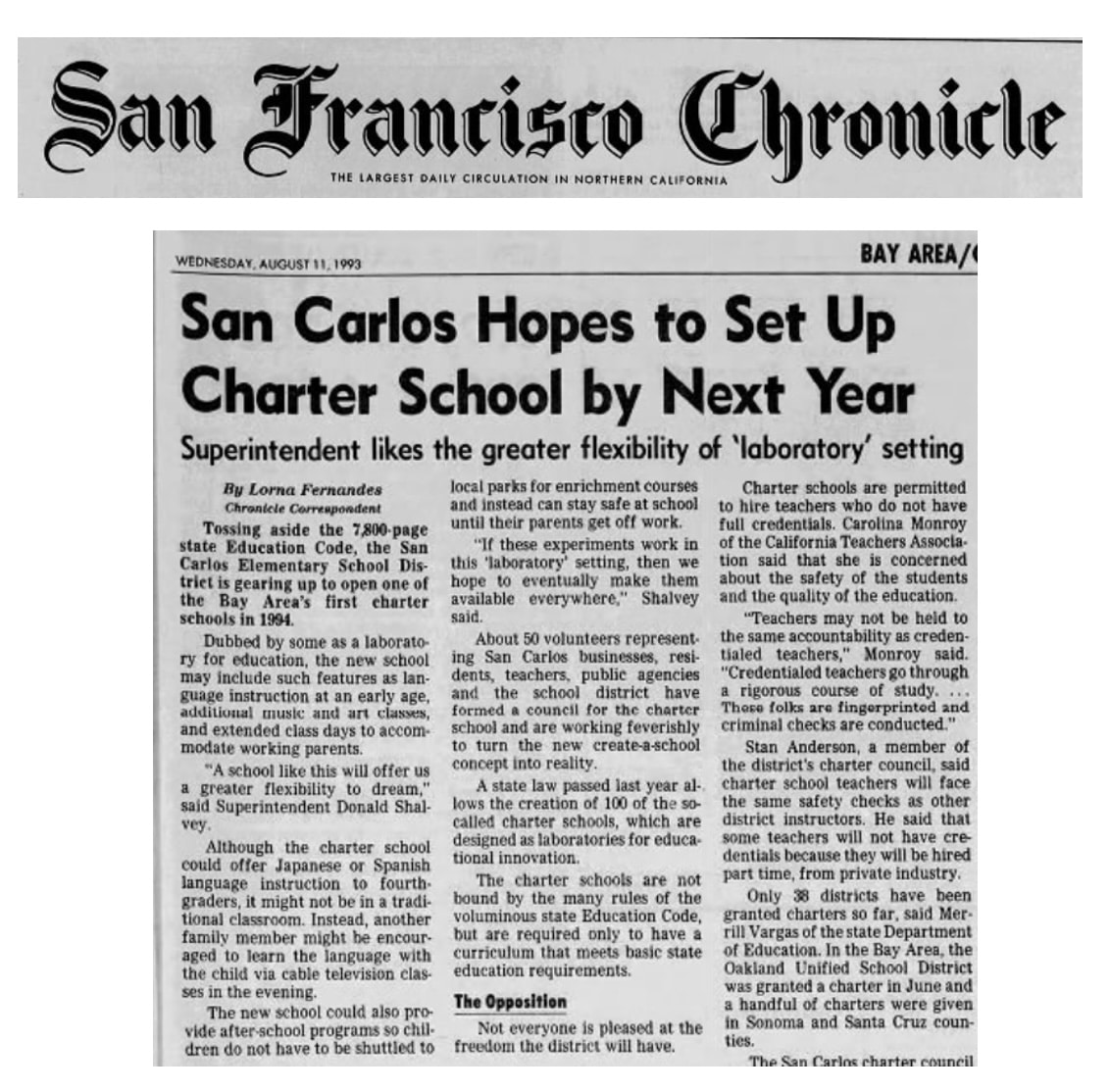
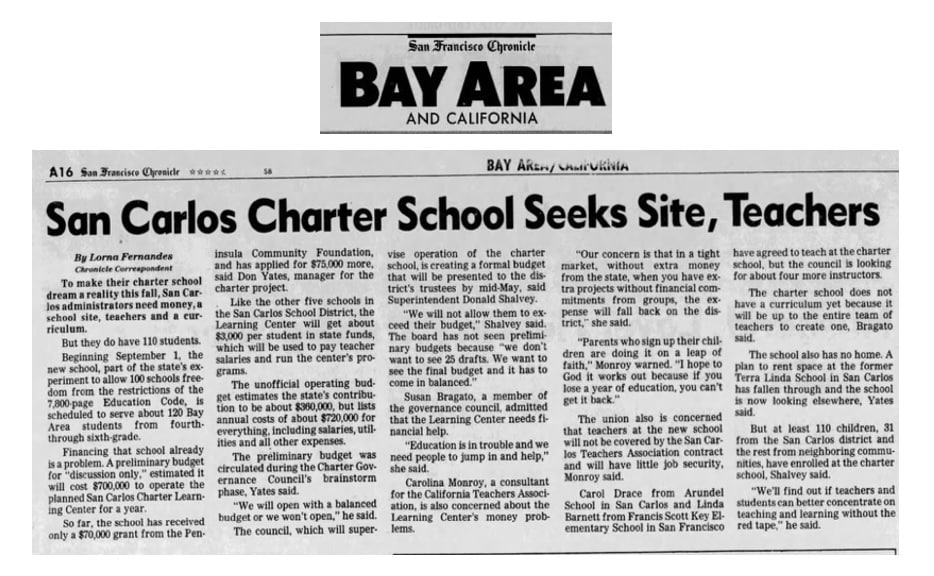
Consistent with his commitment to drawing the whole community into education, Don assembled an organizing group of more than fifty teachers, parents, and neighbors. Parents would participate in the school’s daily life. Teachers would have time to learn and collaborate. Civic and business leaders would connect classrooms with the wider community and help bring the latest technology into the school. The relationships among them would hold the enterprise together.
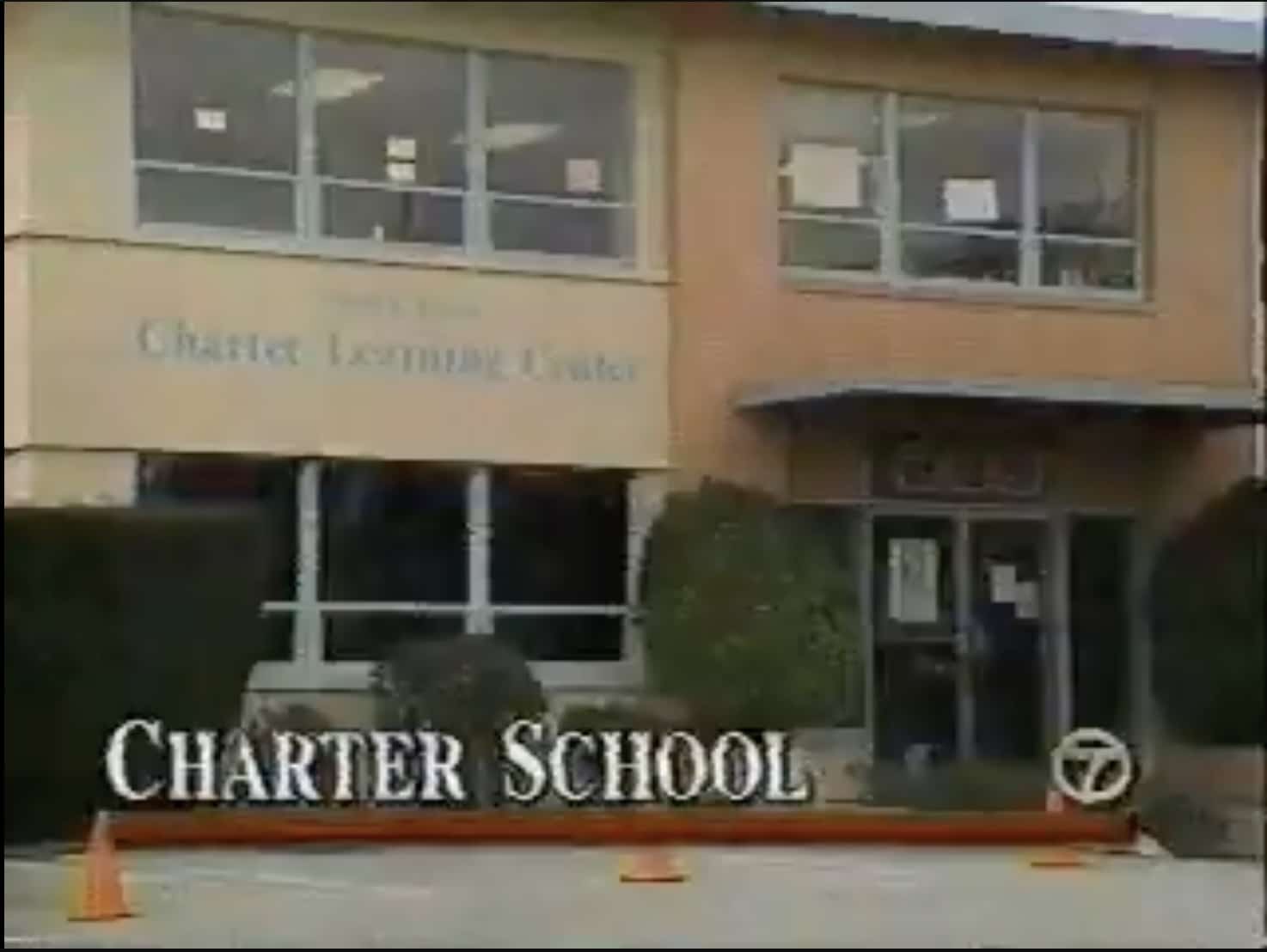
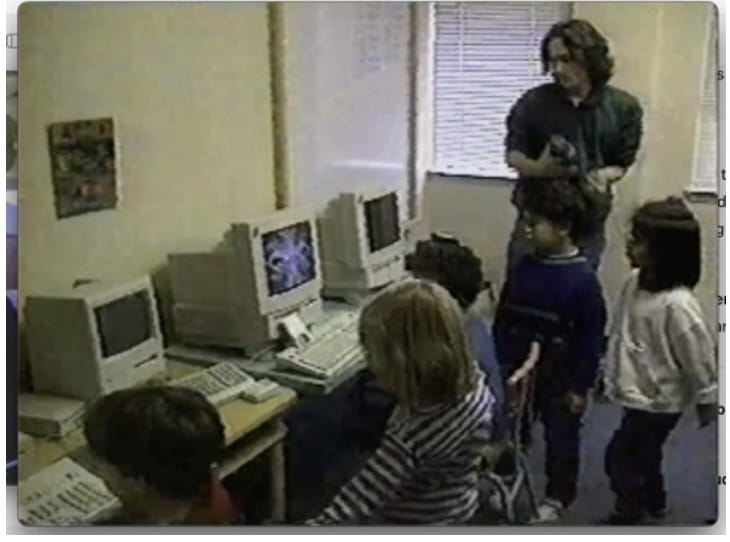
The school opened on August 29, 1994, in leased commercial space. Parents contributed to art and science learning, teachers worked across grades, and projects connected schoolwork with the world children lived in.
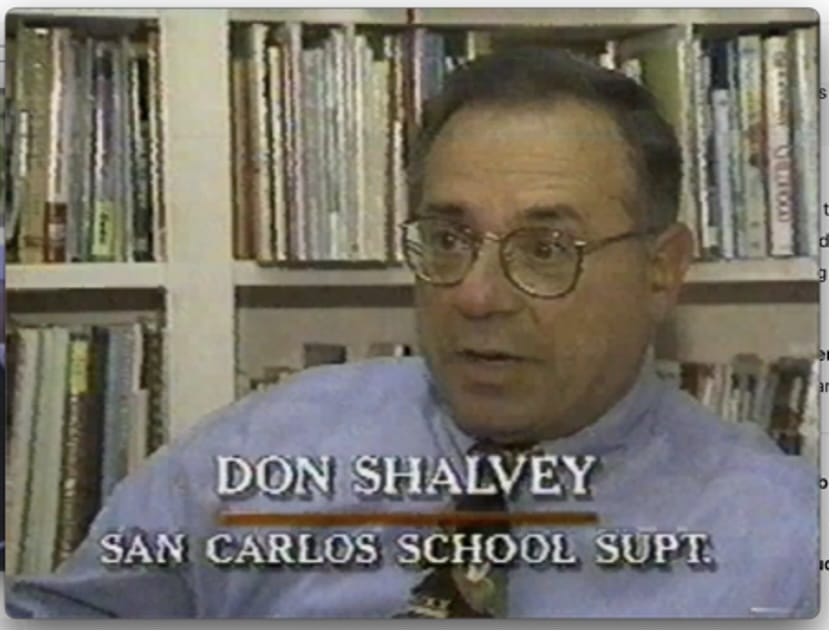
Don understood both the exhilaration and the responsibility of going first. In a local television feature, he explained, “Every day is a new learning experience because either the rules have changed or there are no rules.” He also made sure journalists spent time with students, parents, and teachers. They could see how the freedom to make their own decisions was changing the school, and how closely its community was working together.
As the year unfolded, those involved in SCLC began to recognize that they were building a school unlike any they had known. By year’s end, its community reflected Don’s own personality, alive with optimism, bridge building, and joy.
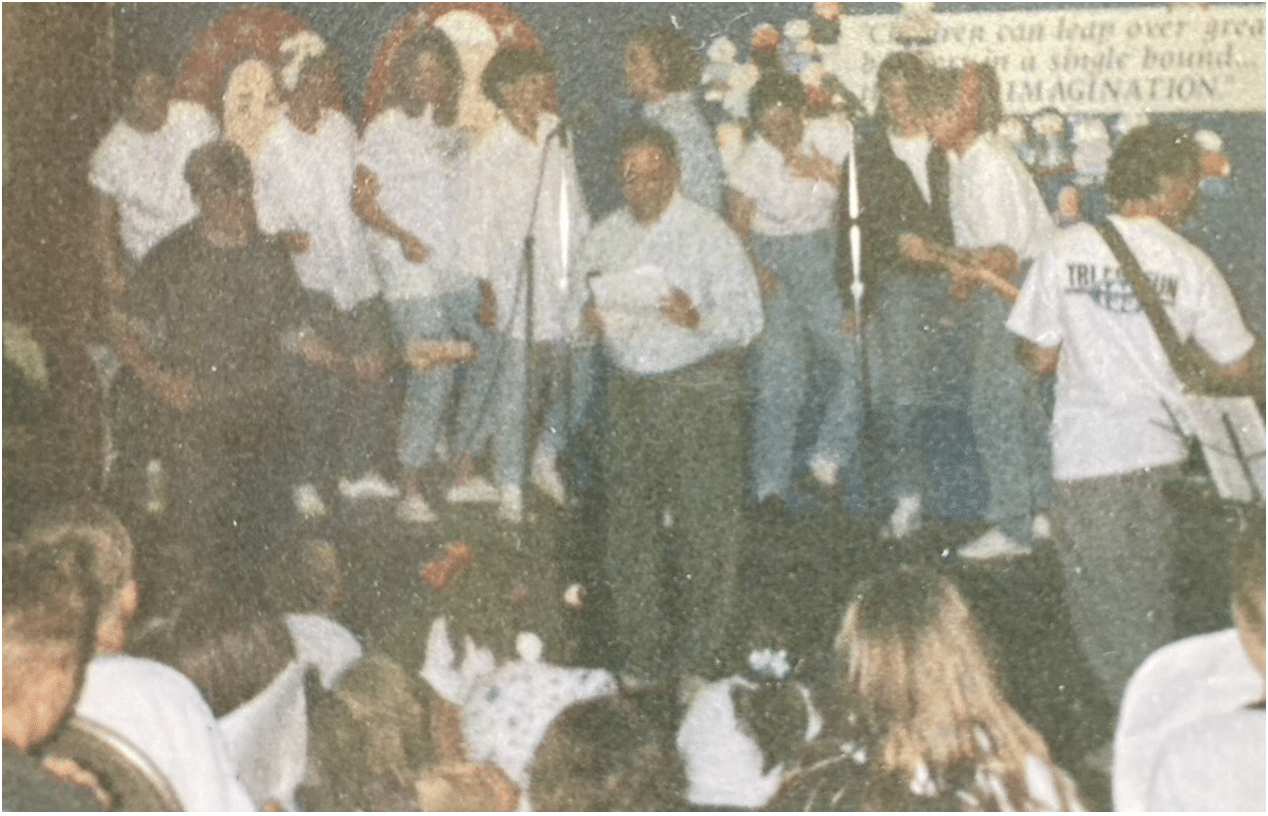
At the celebration ending that first year, Don led a band, adding his own lyrics to an Otis Redding tune while school staff sang the doo-wop backing parts. In Don’s childhood home, a framed dollar had marked his father’s first earnings as a musician. Now the love of music his father had passed on to him was helping bring another community together. It, too, had found a home in Charter No. 1.
National Attention and the Fight to Lift the Cap
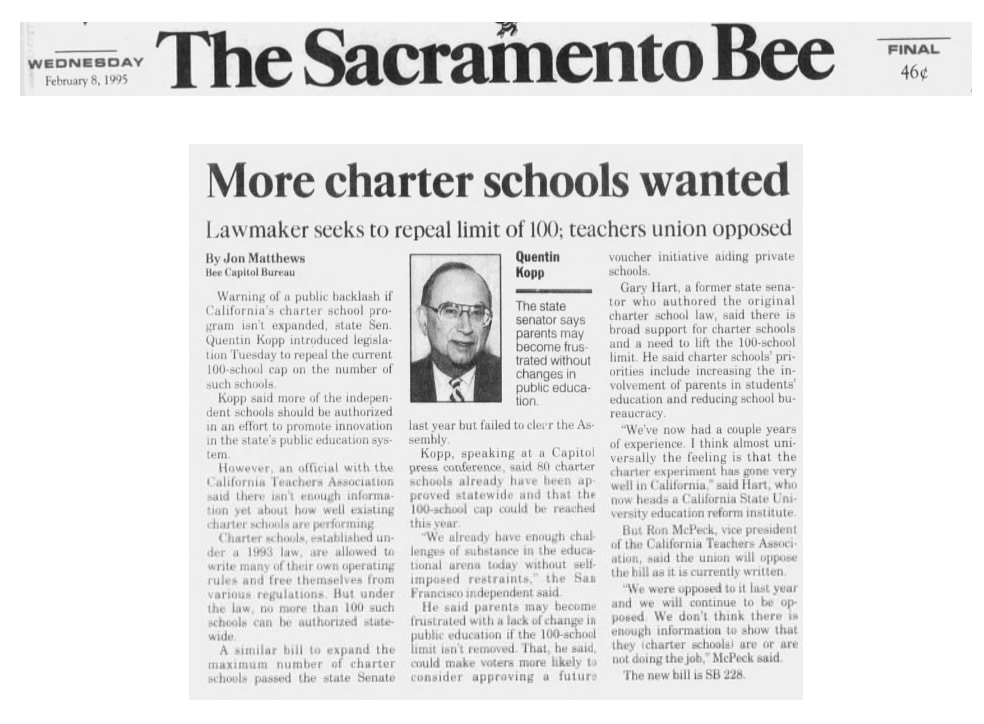
Before SCLC had even opened, its story was beginning to travel. In 1994, the Tulsa World carried the story halfway across the country, describing a school that was reinventing education by discarding rules. By the end of 1995, nineteen states had passed charter school laws. San Carlos was becoming part of a national conversation about what greater freedom could make possible.
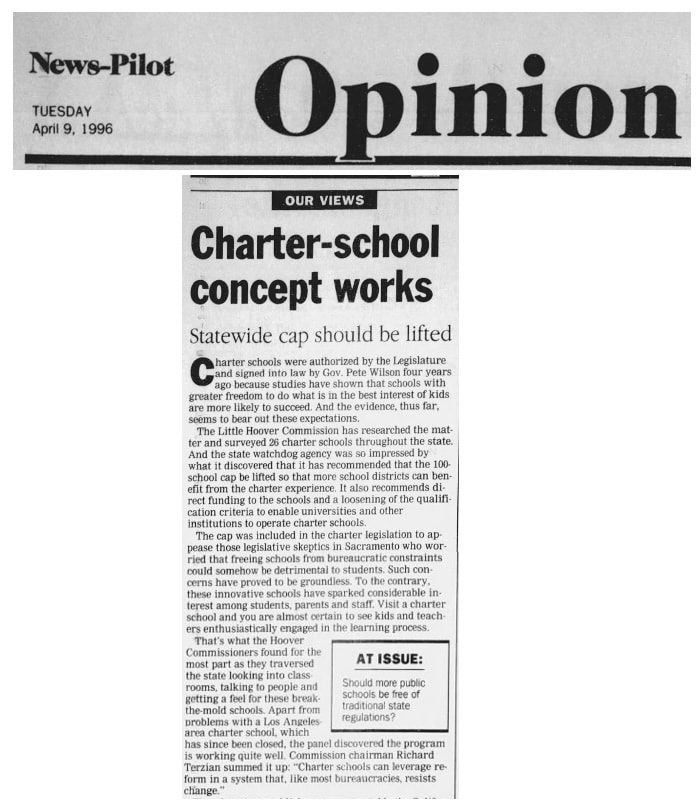
Across California, school developers were stepping forward. Leaders like Don helped establish the California Network of Educational Charters (CANEC), the first advocacy and support organization for what was increasingly understood to be a social movement. But the enthusiasm soon ran into a limit written into the original law: California could have only one hundred charter schools. A ceiling few had expected to become a practical obstacle for years was already threatening to stop the movement’s growth.
State Board waivers and limited statutory exceptions created some room beyond that ceiling. A lasting solution, however, would require the legislature to change the law. The extraordinary parliamentary maneuver that had secured its initial passage could not simply be repeated. Charter schools were building public support, but turning that support into votes in the Capitol meant confronting interests determined to contain their growth.
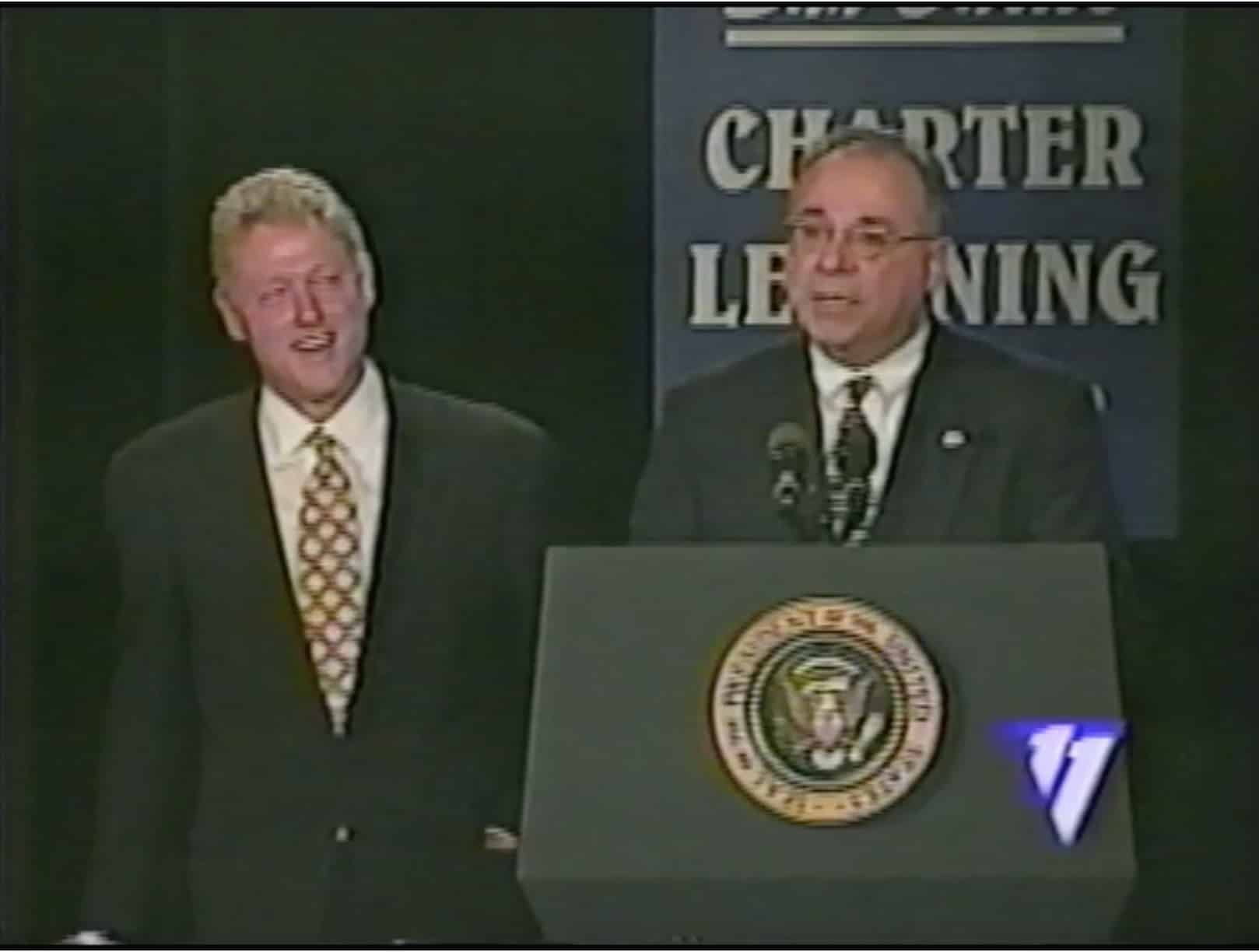
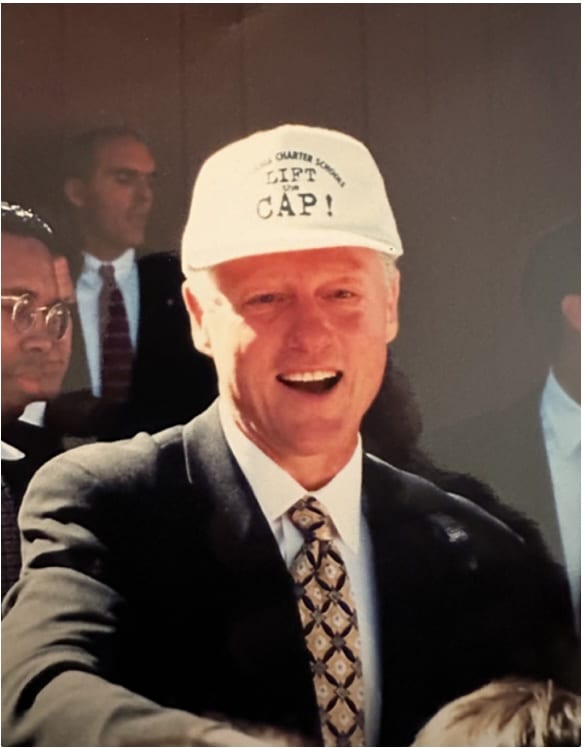
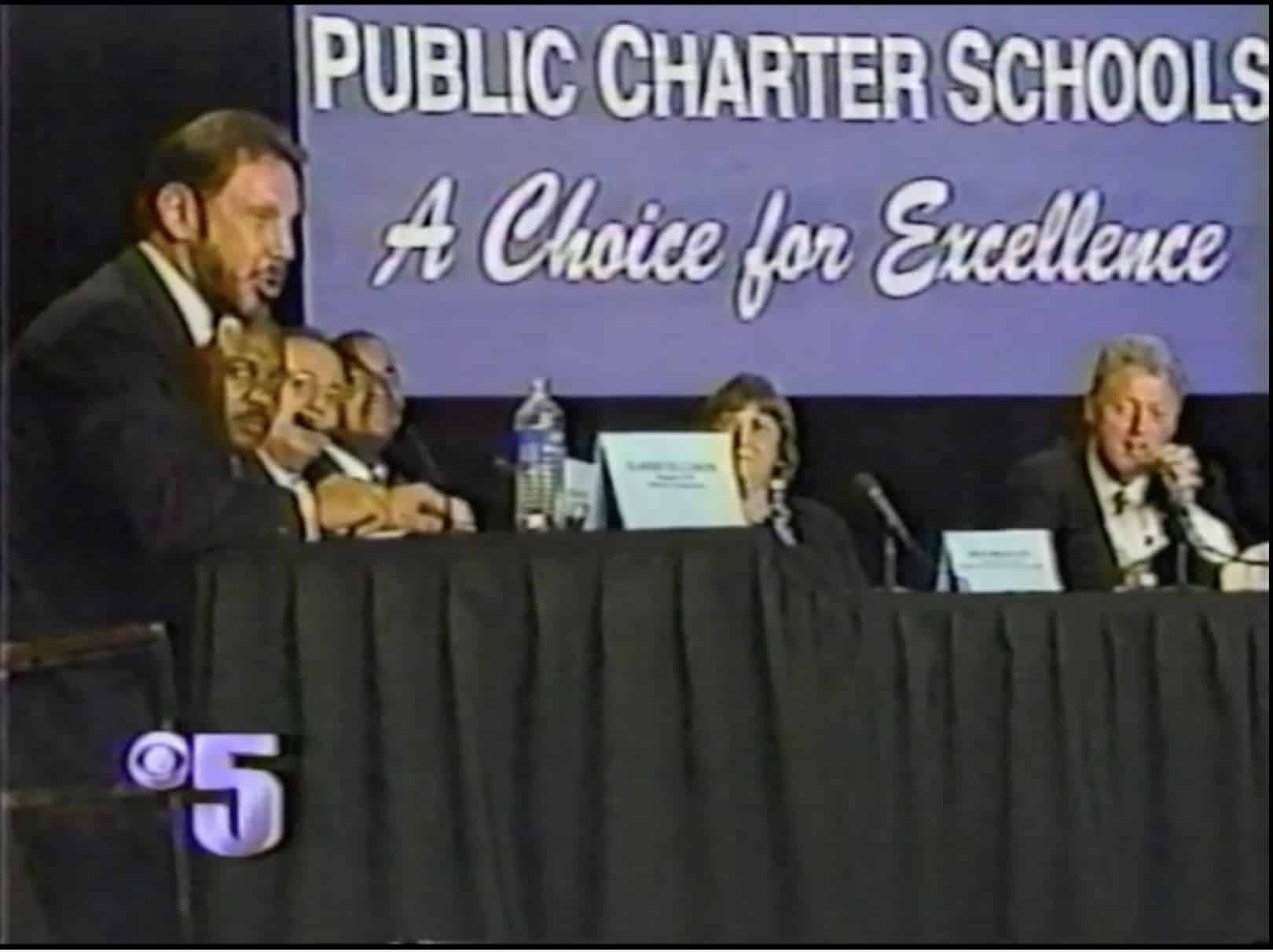
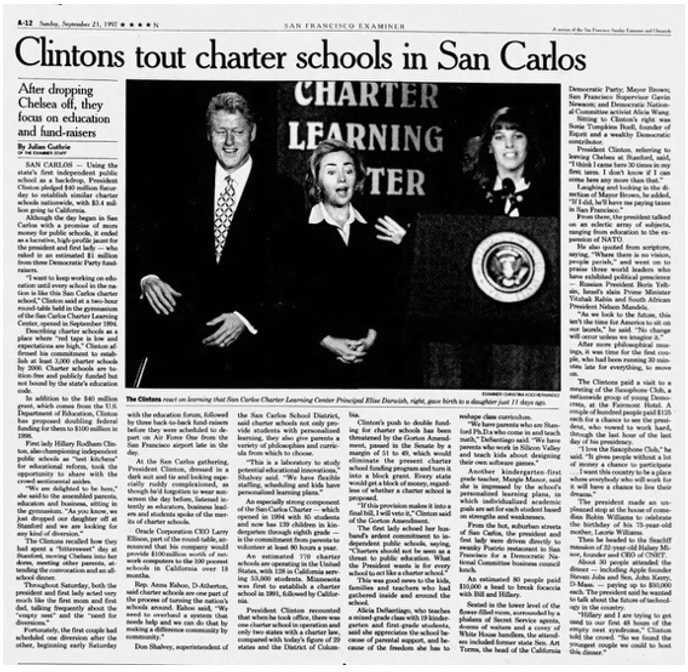
In the fall of 1997, circumstances came together that ultimately led to change. President Bill Clinton, an early charter school champion, and his wife Hillary came to the Bay Area to take their daughter to college. With San Carlos Charter Learning Center having become one of the nation’s most visible charter schools, it was natural that they would want to couple their trip with a visit to the school. On September 20, the president and Don co-chaired a roundtable discussion, with civic and business leaders joining educators and family members.
The biggest news that day was Clinton announcing that he was directing $40 million in federal funding to help charter schools open. He also gave the campaign to lift California’s cap an unforgettable image, putting on a white “Lift the Cap” hat. But lifting the cap would require more than a president donning one.
As the presidential entourage pulled away, the day’s dignitaries began to leave. One man stayed, waiting quietly while other well-wishers processed the excitement with Don. Finally, his opportunity came. Without first introducing himself, he asked the question he had been waiting to put to the man who had created Charter No. 1.
“So, do you think the cap will ever be lifted?”
Don’s answer was a typical Shalvey mix of optimism and realism. It would depend on how the effort was taken on.
The man then introduced himself. He was Reed Hastings, a technology entrepreneur who had recently sold his first company. He also had a longstanding interest in education, having spent years teaching mathematics in the Peace Corps.
Reed said he had an idea about how the cap might be lifted. Would Don be willing to have lunch the following week?
And so began a partnership, and a friendship, that would last for the rest of Don’s life.
A Question, a Partnership, and the Birth of Aspire
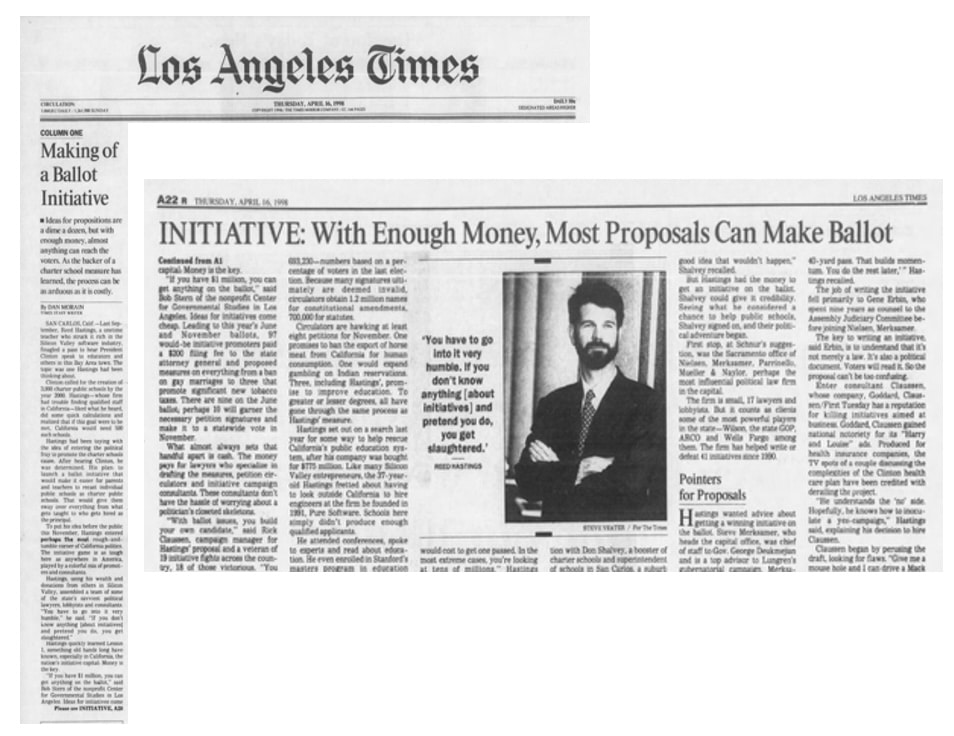
At lunch the next week, the contours of that partnership began to take shape. Don knew public education from decades of work inside it. Reed brought an entrepreneur’s willingness to approach a seemingly immovable problem from another direction. Soon they were meeting regularly, and over the course of that fall, a plan began to emerge. Don and Reed developed it together, though Don would later credit Reed with the central idea.
They came to describe their approach as an “inside/outside strategy.” By that, they meant that working entirely inside the state Capitol was unlikely to produce the change they sought. Status quo interests were too entrenched to let another expansion of charter schools get past them. Legislative action remained the most likely path forward, but Reed recognized that they would need pressure from outside the building to get the people inside it to move.
California’s initiative process offered a way to create that pressure. It allowed citizens to propose a law directly to voters, bypassing the legislature if they gathered enough signatures to qualify the measure for the ballot. By getting an initiative moving, gathering signatures, and generating press, Don and Reed could begin to convey a sense of inevitability that would force the powers that be to recalibrate.
Which is exactly what they did.
Before Thanksgiving, Don and Reed had formed a new 501(c)(4) advocacy organization, Californians for Public School Excellence. Reed funded it, joined by other entrepreneurs, some of whom had attended the Clinton roundtable. The campaign secured the Attorney General’s title and summary, attracted extensive newspaper coverage, and began gathering signatures. By spring, it had collected more than a million.
That momentum began to change the calculations inside the Capitol. Policymakers in Sacramento and leaders within the California Teachers Association began to believe the measure had a good chance of passing if it reached the voters. They signaled their willingness to sit down and talk. Together, Reed and Don became a formidable force. As Reed would later describe it, “The combination of Don as Mr. Charming Establishment and me as a wealthy provocateur presented a unique challenge to the teachers union.”
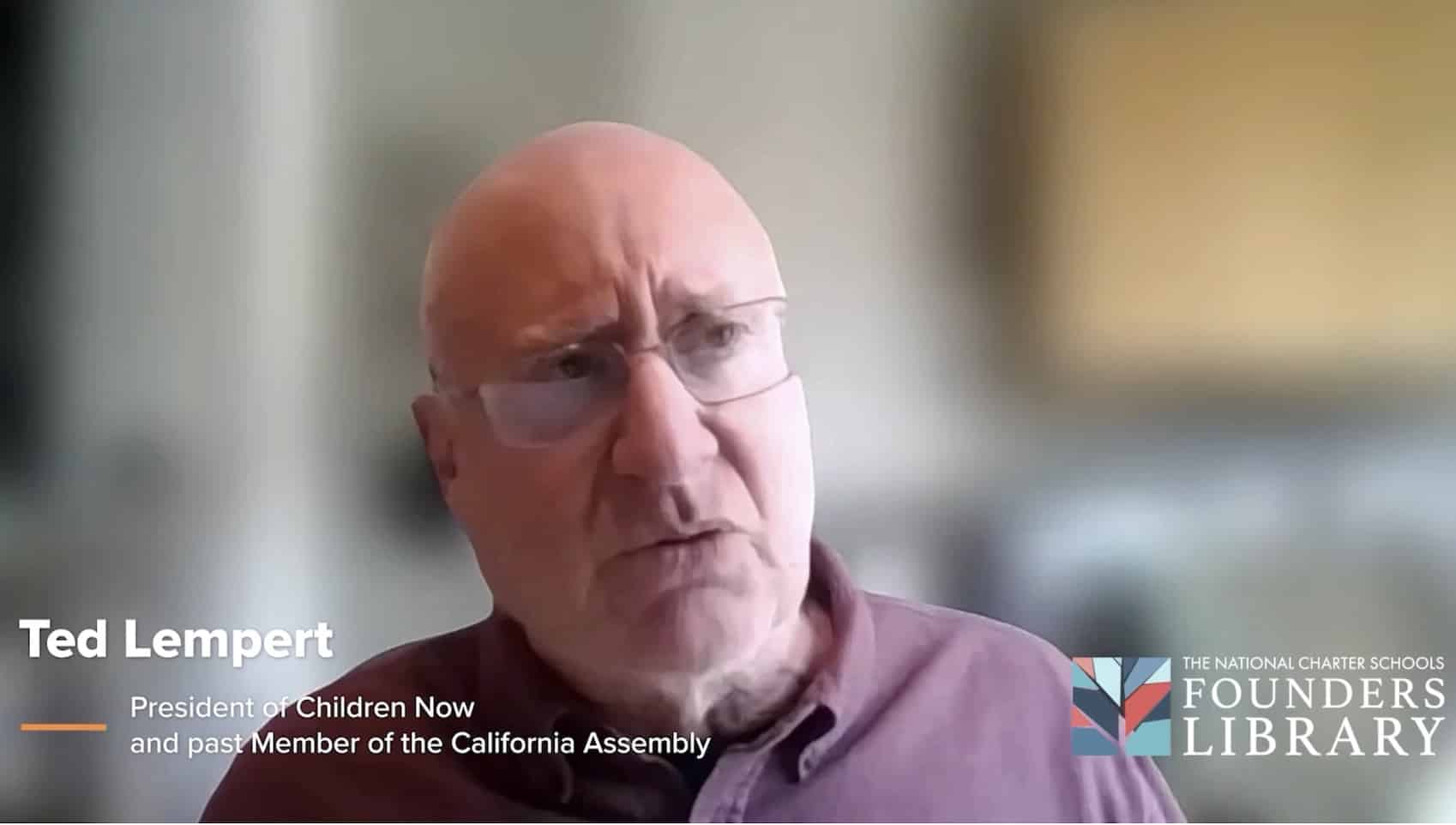
Soon CTA was offering concessions, leading Don to bring Assemblymember Ted Lempert into the negotiations. Lempert was another professional contact Don had made through his work as superintendent. He knew the building well and understood that maintaining forward momentum was essential. He called legislative leadership and delivered an ultimatum: they had three weeks to reach a deal or the measure would go to the voters.
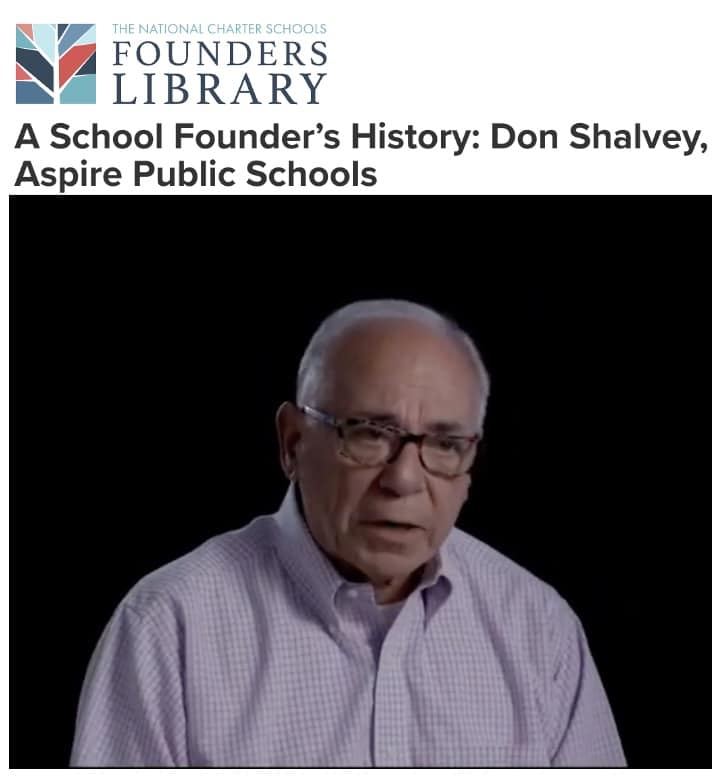
Expressions of outrage and disbelief ensued, but Lempert’s bad-cop approach gave Don an opportunity to play to his own natural strengths. Among those reacting most acrimoniously was Senator John Burton, the Senate president pro tem, whose support would be essential. In his oral history, now preserved in the National Charter School Founders Library, Don recounted how he helped win Burton over. During a meeting in the pro tem’s office, Burton mentioned his fondness for the Carlos Club, a dive bar in San Carlos where he and his wife would stop on their trips between the coast and Sacramento. Did Don happen to know it?
Know it? Don had a whole group of friends who hung out there. After leaving the pro tem’s office, he drove directly to the club and got the people around the bar to write handwritten notes to Burton, encouraging him to support the bill.
Within three weeks, an agreement among all the necessary parties had been struck.
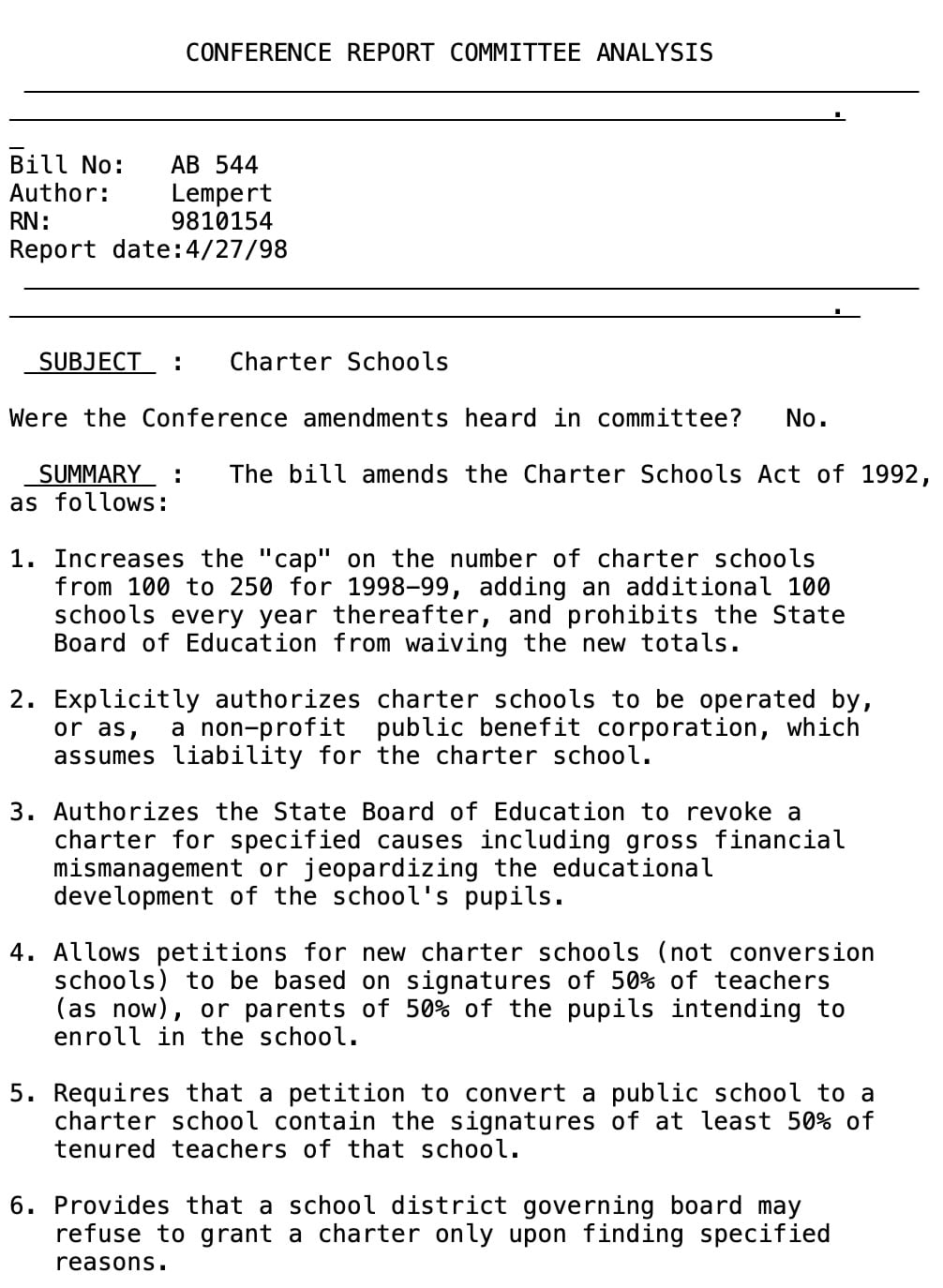
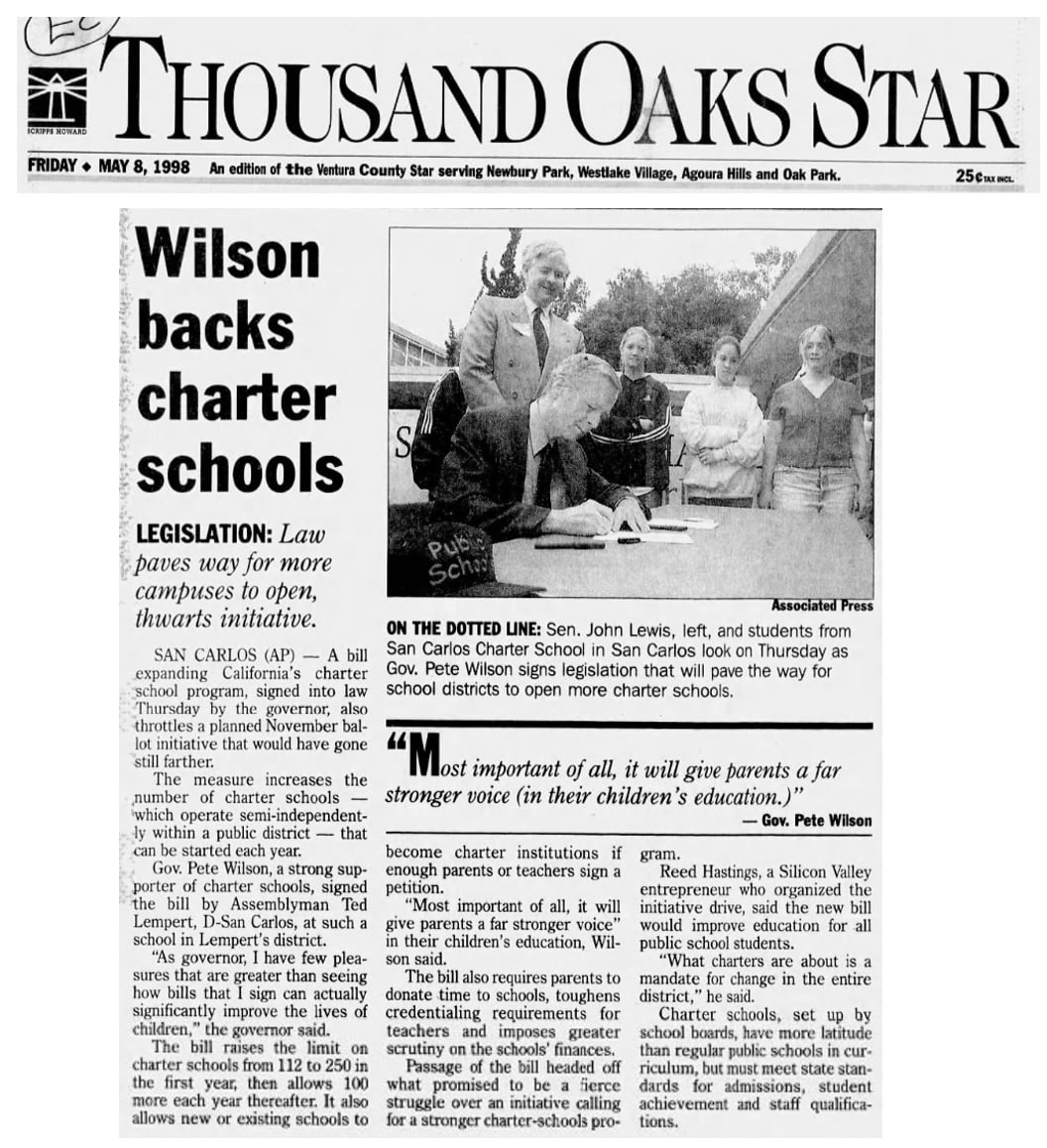
When it came time to sign the bill, San Carlos Charter Learning Center was the natural place for its supporters to gather. There, on May 7, 1998, Governor Pete Wilson stood on the school’s playground in a light drizzle and signed AB 544, with students, parents, and teachers looking on. Less than eight months after Reed had waited to ask whether the cap could ever be lifted, the governor was signing the answer into law at Charter No. 1.
Most of the attention that day and in the ensuing weeks focused on lifting the cap. But Don and Reed were just as interested in a quieter provision Ted had inserted into the bill: explicit confirmation that charter schools could be operated by nonprofit organizations, opening the way for families of schools under common governance.
Rather than retire Californians for Public School Excellence after its political work was done, Don and Reed had the 501(c)(4) reconstituted as a 501(c)(3). The organization created to change the law would now use the freedom it had won to build schools. It would ultimately become known as Aspire Public Schools.
California’s Charter No. 1 had brought them together. Now their partnership was giving the movement another first.
The nation’s first charter management organization had been born.
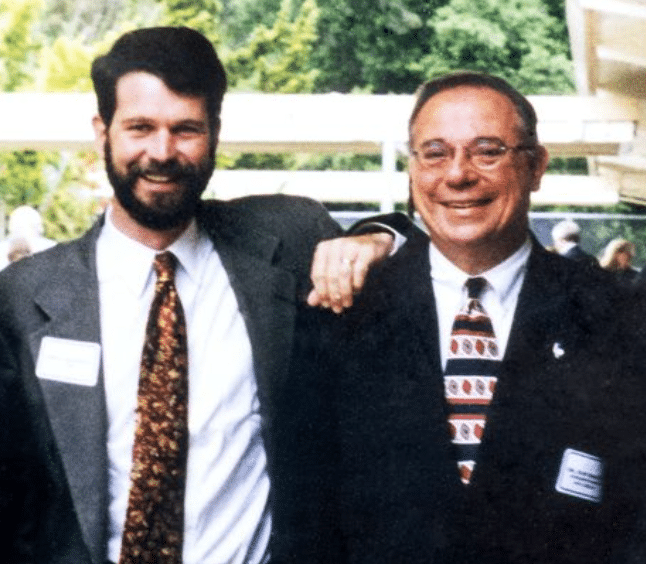
Reed waited until the end of the Clintons’ visit to ask Don whether the cap could ever be lifted. Lunch the next week began a partnership and friendship that would endure for the rest of Don’s life.
Get QR Code